What restrooms does a farm operation actually need?
Field sanitation rules exist because ag work spreads people out across acreage, far from any building. OSHA 1928.110 sets the baseline: potable water, a toilet, and a handwashing setup for hand-labor employees, all within a quarter mile of where people are working. That's different from a construction site rule like OSHA 1926.51(c), which counts workers per fixed location. A grove or row-crop operation near Bunnell, 13.5 miles southwest of Palm Coast, might need two or three standard porta potty units spread across different fields instead of one cluster at a single gate.
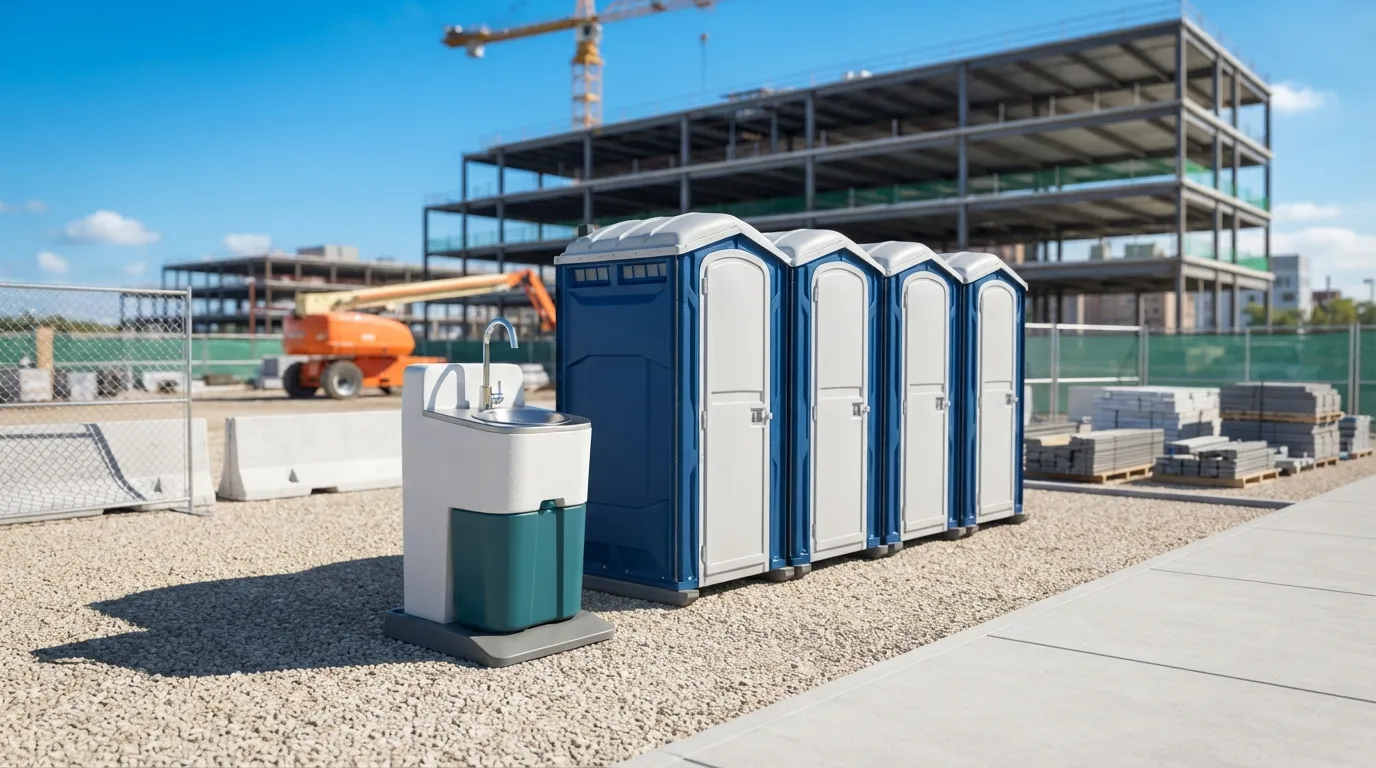
Most farm accounts start with a standard portable toilet rental, a 44 by 48 inch footprint unit standing about 92 inches tall, built around a 60 to 70 gallon holding tank. That size handles a seasonal crew without needing daily service. Pair it with a handwashing station rental, since OSHA 1928.110 treats water and handwashing as part of the same requirement, not an add-on. If your crew works with pesticides or treated seed, understand that 1926.51(f)(1) governs washing after applying herbicides or insecticides specifically, not general field sanitation. Farms that also run a small packing operation may want a portable sink rental near the processing area, separate from field units.
For larger operations with pole barns or equipment yards, a storage container rental or a 20ft storage container keeps tools and chemicals secured between seasons.
How many units does a Palm Coast farm need?
The right count depends on crew size and how spread out the acreage is, and OSHA 1928.110's quarter mile rule often forces more units than a simple headcount would suggest. Use our guide on how many porta potties you need as a starting point, then adjust for distance between work zones. A single packing shed crew of 15 might need just one unit. A row-crop operation with three separate fields, each more than a quarter mile from the next, needs a unit at each one, even if the total headcount stays under 20.
| unit | duration | typical price |
|---|---|---|
| standard | day | $150 |
| standard | week | $200 |
| standard | month | $200 |
| delivery_fee | week | $100 |
Seasonal and year-round farms usually land on weekly or monthly terms rather than daily, since crews return to the same fields across a planting or harvest cycle. A monthly porta potty rental works well for operations running through a full growing season. Ag accounts near Bunnell or Flagler Beach, 12.0 miles southeast, often stagger delivery across multiple sites in a single truck run, which can lower the delivery fee per unit compared to separate calls.
Do farm restrooms need to be ADA accessible?
Field sanitation units for hand-labor crews aren't held to the same clustering standard as public event restrooms, but if your operation hosts visitors, a farm stand, or agritourism events, ADA rules apply differently. Where portable units are clustered for public use, ADA Standards section 213.2 requires at least 5 percent to be accessible, and never fewer than one. An ADA accessible porta potty unit needs a 60 inch turning circle under section 304.3.1, plus a 32 inch clear door opening per section 404.2.3, so placement matters more than it would for a standard field unit.
If your farm runs a fall festival, u-pick event, or holds a public market day, treat that event differently from daily field operations. Check our county fair restrooms and festival restroom rental pages for guidance on public-facing counts, and consider a deluxe flushable porta potty for visitor-facing areas near Palm Coast even if field crews use standard units elsewhere on the property.
Placement still matters for surface stability. ADA Standards section 302.1 requires floor and ground surfaces to be stable, firm and slip resistant, which on farmland usually means a gravel pad or compacted base rather than loose soil. Our porta potty placement guide covers ground prep in more detail. Roll-off needs matter too: if you're clearing brush or old fencing as part of expanding acreage, a roll-off dumpster rental needs about 60 feet of straight clearance behind the delivery truck, which can be tight on some access roads.
How often do farm restrooms get serviced?
Weekly service is the standard baseline for portable sanitation, per ANSI/PSAI Z4.3, covering up to 10 users over a 40 hour week. Farm crews with more workers or units near processing areas often need twice-weekly visits. Palm Coast Porta Pros builds the schedule around your crew size and harvest calendar.
Do we need a handwashing station separate from the toilet?
Yes. OSHA 1928.110 requires handwashing capability alongside the toilet, not just a toilet alone. A hand sanitizer station doesn't satisfy this on its own since 29 CFR 1910.141(d)(2) calls for soap and towels or a drying device.
Can we get service during harvest season without a long-term contract?
Yes, short-term and seasonal terms both work. A porta potty rental per day option covers short harvest windows, while weekly or monthly terms suit longer growing seasons.
What if our farm also has a septic system for a farmhouse or office?
That's a separate service. A residential septic tank typically needs pumping every 3 to 5 years depending on tank size and household use. See septic pumping service for scheduling.
Do restrooms need to be within a certain distance of workers?
Yes, OSHA 1928.110 requires facilities within a quarter mile walk of hand-labor employees. Spread-out acreage near Palm Coast often needs multiple units rather than one central location to meet that distance rule.
Next step
Get a delivery date
Tell us the address, the dates and the headcount. We size the order and confirm the route.