Where should a porta potty go on site?
Pick flat, stable ground first. ADA Standards section 302.1 calls for surfaces that are stable, firm and slip resistant, and that rule of thumb applies even where you are not required to place an accessible unit. Keep the unit within reach of the service truck; our drivers need a clear path in and don't want to cross wet sod or loose mulch on a Palm Coast lot after a summer storm. Avoid low spots that pond water. If you're setting units for a construction crew, pair the layout with our construction site services page, which covers where fencing and dumpsters usually sit relative to the toilets. For events, check the event restroom rental guide before you finalize a map, since foot traffic patterns change where the unit should sit. If you're renting a deluxe flushable porta potty or an ADA accessible porta potty, give it a bit more space. ADA Standards section 304.3.1 calls for a 60 inch turning circle in front of an accessible unit, and section 404.2.3 sets minimum door width at 32 inches, so crowding it against a fence line or dumpster defeats the purpose.
What are the porta potty placement rules near property lines and structures?
There's no single number we can hand you for every Palm Coast lot, because setback distance from a property line or structure is a city-by-city call and it isn't something we can quote from memory. What we can tell you: keep units off septic drain fields, away from windows and away from any spot where runoff drains toward a neighbor's yard. If your event or job site touches the public right of way, confirm placement with the city before delivery. Our porta potty permit requirements page walks through what to check and who to call. The same caution applies to dumpster placement permit questions. Dumpster placement permit cost and rules vary by jurisdiction too, and we cover what to verify on our dumpster permit requirements page before a roll-off ever leaves the yard.
How much clearance does delivery require?
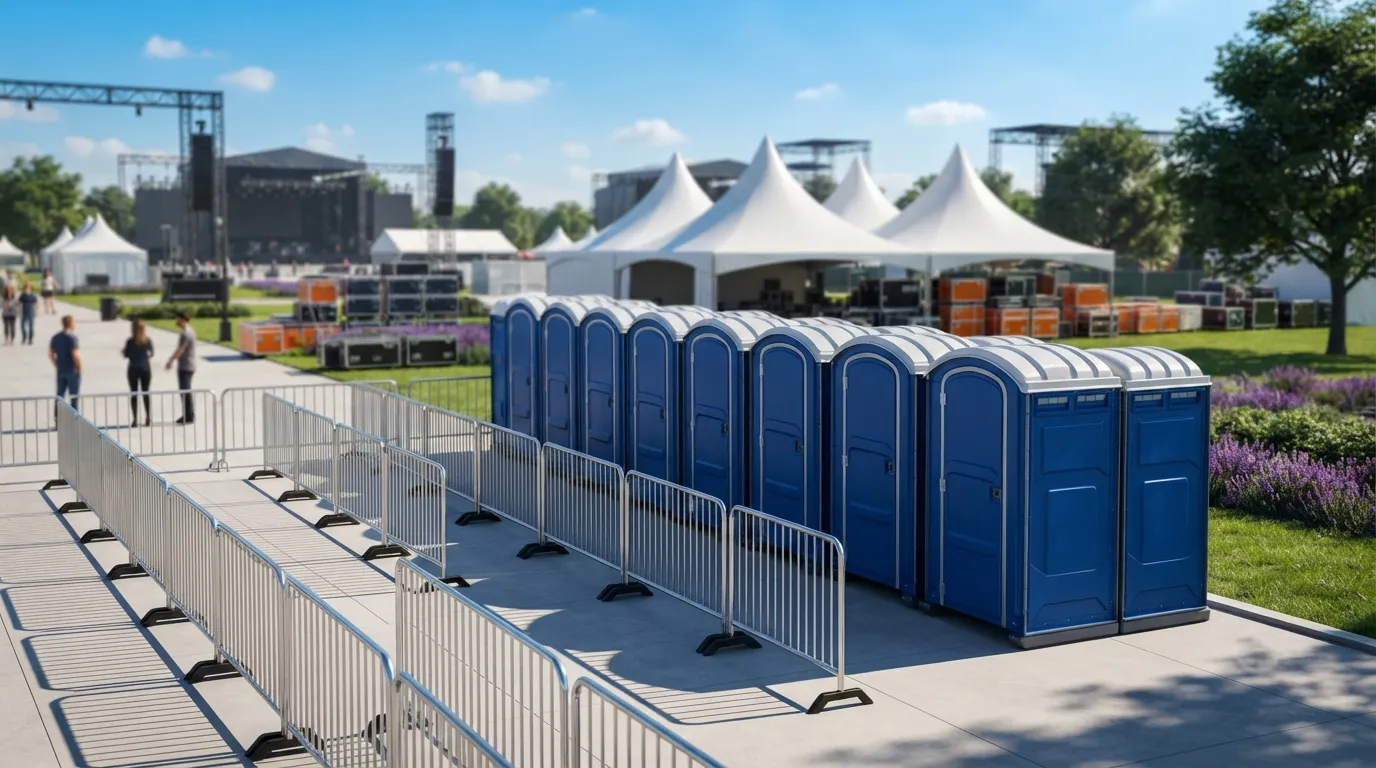
A roll-off truck needs about 60 feet of straight clearance behind it to back in and set a container, so if you're planning roll-off dumpster rental alongside your toilets, map that path before delivery day. Porta potty trucks need less room but still want a straight shot in, not a tight turn around a fence corner. A standard unit runs about 44 by 48 inches on the ground and stands roughly 92 inches tall, so give it headroom under low branches, a common issue on wooded Palm Coast lots. If you're setting a temporary fence rental around the same site, plan the fence line after you've placed the toilets and dumpster, not before, so the gate lines up with the service path. For storage container rental or a mobile office trailer, leave the same straight approach; a mobile office trailer replacement doors issue after a bad delivery angle is a hassle nobody needs, so get the pad flat and the approach clear the first time.
Do porta potty placement rules change for accessible units?
Yes. ADA Standards section 213.2 requires that where single-user portable units are clustered, at least 5 percent of them, and never fewer than one, must be an accessible unit, and it needs its own accessible path in. Section 403.5.1 sets that route at 36 inches of clear width minimum, and section 405.2 caps any ramp at a 1:12 slope, so if the ground drops off between the parking area and the unit, plan for a ramp or pick flatter ground instead. Section 308.2.1 also matters for anyone using a wheelchair: reach range on interior fixtures tops out at 48 inches and drops no lower than 15 inches, and section 309.4 requires that door hardware operate with one hand and no more than 5 pounds of force. Our ADA restroom requirements page goes deeper if you're planning a large event with a mixed cluster of standard and accessible units.
| unit | day | week | month |
|---|---|---|---|
| standard | 100-350 | 130-500 | 125-325 |
| ada | 200-400 | 120-240 | - |
| deluxe | 85-1200 | 150-290 | - |
For jobs further out, Flagler Beach sits about 12.0 miles southeast and Bunnell about 13.5 miles southwest of Palm Coast; delivery fees for those runs are quoted separately and typically land between $50 and $150 for the trip depending on distance and duration. Check current numbers on our porta potty rental cost page or the monthly porta potty rental page if you're planning a long-term placement.
How many units does my site actually need?
That depends on headcount and duration, not just square footage. OSHA 1926.51(c)(1) sets 1 toilet per 20 construction workers, scaling to 1 seat and 1 urinal per 40 from there. Our how many porta potties do I need guide runs the math against your crew size.
Does placement affect how often units get serviced?
Yes, indirectly. ANSI/PSAI Z4.3 sets a baseline of one visit per week for up to 10 users, but a unit stuck behind a locked gate or across soft ground slows the driver down. See how often are porta potties cleaned for the full interval.
Can I place a unit near a septic drain field?
No, keep it clear. Drain fields need airflow and dry soil, and a heavy unit compacts ground you don't want compacted. If your own tank needs attention instead, our septic pumping service page covers scheduling, typically every 3 to 5 years for a residential tank.
Do I need a handwashing station next to the toilets?
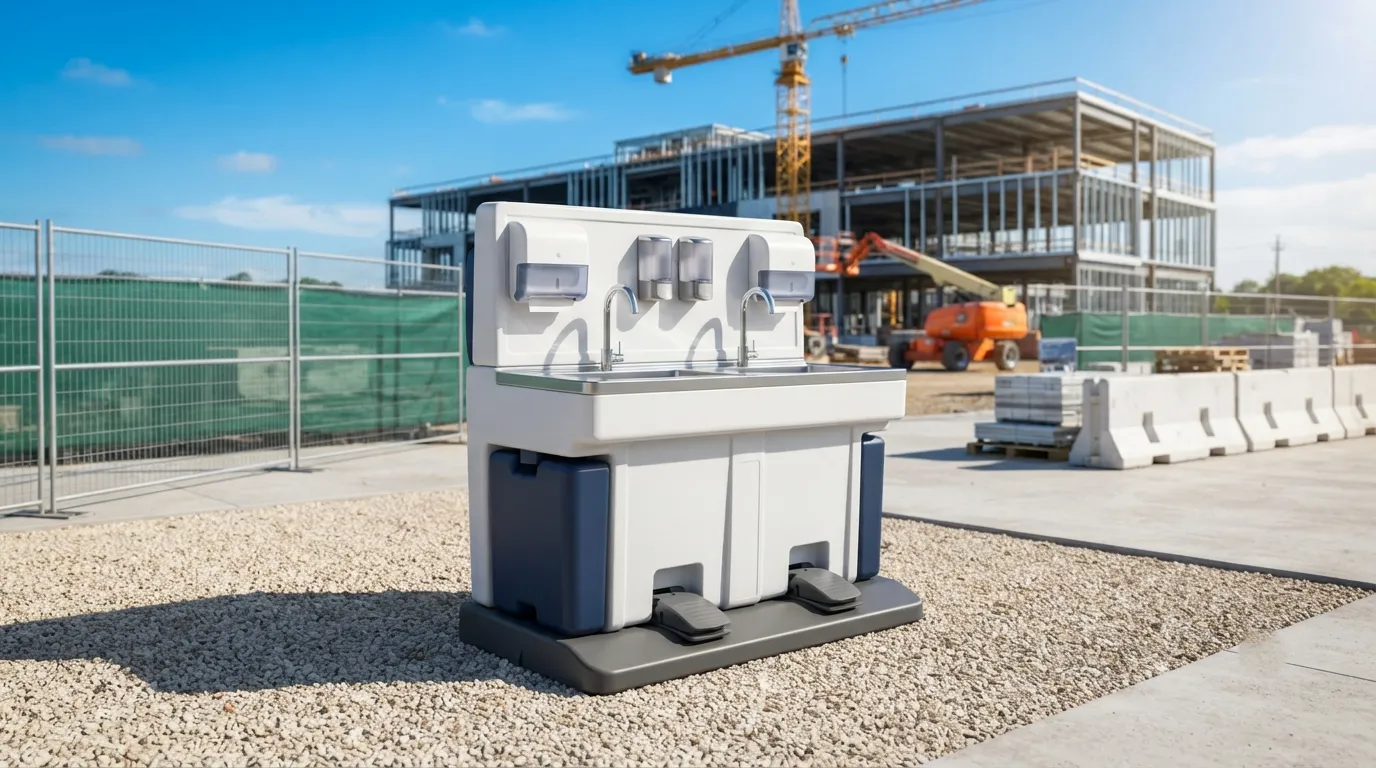
For most job sites, yes, it's standard practice. 29 CFR 1910.141(d)the requires soap and towels or a dryer, not just sanitizer. See handwashing station rental for unit options and setup.
What about placing a dumpster next to the toilets?
Keep 3 to 5 feet between them for service access on both sides. Check dumpster weight limits and what cannot go in a dumpster before loading starts, since placement won't fix an overweight container.
Next step
Get a delivery date
Tell us the address, the dates and the headcount. We size the order and confirm the route.